
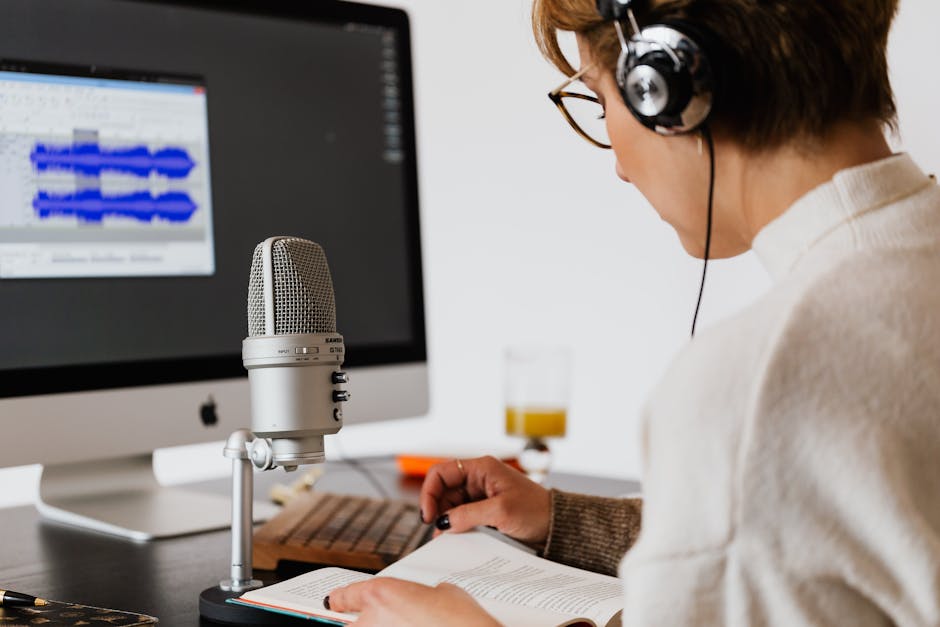
Text to Audiobook works best for non-fiction documents you need to understand quickly or review in detail, like research papers, textbooks, reports, or complex articles. Documents that rely heavily on visual formatting, emotional nuance, or specific literary style, such as novels, poetry, or highly visual presentations, are generally less suited for this format, as their core value can be lost without visual context or a human narrator's full emotional range.
When an Audiobook You Can Talk To Shines
The core benefit of Text to Audiobook is combining an audio narration with an AI companion that answers your questions about the content in real time. This combination dramatically enhances your ability to engage with certain types of documents, transforming passive listening into an active learning experience.
Information-Dense Non-Fiction
Think about those dense academic papers or professional reports filled with facts, figures, and intricate arguments. Listening to these alone can be challenging; you might miss a crucial detail or want to quickly verify a point. This is where the AI companion becomes invaluable. You can pause the audio and simply ask, "What was the main finding of the study?" or "Can you summarize the author's argument for this section?" This ability to query the document on the fly makes understanding complex information much more efficient. Lifelong learners delving into new subjects or busy professionals needing to digest market research during a commute will find this particularly powerful.
Textbooks and Learning Materials
For students or anyone learning a new skill, textbooks are often a critical resource. Text to Audiobook allows you to listen to chapters, then immediately ask clarifying questions about concepts, definitions, or examples. Language learners, for instance, can ask for the meaning of a word in their native tongue or for further context on a phrase in a non-native language, all without breaking their listening flow or opening another app. It's like having a tutor right there with you, making study sessions more interactive and less overwhelming.
Meeting Notes and Internal Documents
Ever leave a meeting with pages of notes, only to realize later you can't recall the specific decision made about one point? Uploading your meeting minutes or internal reports turns them into an accessible audio format. You can listen on the go and, if a question pops up, ask the AI to pinpoint the exact resolution for an action item or who was assigned a particular task. This helps ensure everyone is on the same page and keeps projects moving forward.
When Other Formats Are Better
While an interactive audiobook is incredibly versatile, it's not the perfect fit for every type of document. Recognizing these limitations helps you use the tool most effectively.
Novels, Poetry, and Literary Essays
For works where the author's prose style, narrative voice, and emotional impact are paramount, a human-narrated audiobook or reading the physical text often provides a richer experience. The beauty of a well-turned phrase, the subtle irony in a character's dialogue, or the rhythm of a poem can be diminished by a synthetic voice, no matter how advanced. While you could still ask an AI about plot points or character motivations, the primary joy of engaging with these documents comes from the artistic delivery or careful reading, which a text-to-audio converter cannot fully replicate.
Highly Visual Documents
Documents that rely heavily on charts, graphs, diagrams, or complex layouts, like scientific posters, detailed infographics, or design portfolios, are generally poor candidates for any audio conversion. The core information in these documents is visual, and trying to convey it through audio alone would be incomplete or confusing. While the AI could theoretically describe elements, the fundamental purpose of these documents is visual communication.
Simple, Short Articles
For very short, straightforward articles or simple emails, the overhead of converting and then interacting might not be necessary. If you just need to hear a few paragraphs read aloud for convenience, a basic text-to-speech function in your browser or operating system might suffice. The real power of Text to Audiobook comes into play with longer, more complex documents where deep comprehension and interactive engagement add significant value.
Text to Audiobook excels at turning your functional, information-rich documents into powerful learning and review tools. It's designed to help you conquer your reading list, understand complex topics, and get quick answers when you need them most, transforming how you interact with everything from research papers to personal development books. If you are looking for an AI that answers questions about a document while you listen, this is the right tool. For a leisurely novel, perhaps reach for a human-narrated classic.
Comments
No comments yet.