The science of learning by listening, and where audio alone falls short
Listening to a document can genuinely help you learn, but only under specific conditions. The research is clear that passive listening, audio playing while your attention drifts, produces weak retention. Active listening, where you pause, question, and rewind, works far better and can rival reading for comprehension.
That gap between passive and active is the whole story. It's also the difference between an audiobook that entertains you and one that actually teaches you something you'll remember next week.
The 1971 experiment that changed how we think about attention
In 1971, a Stanford University researcher named Walter Mischel ran an experiment that became famous for the wrong reason. He sat preschoolers in a room with a marshmallow on a plate and told them they could eat it now, or wait and get two later. Most people remember this as the "marshmallow test" and quote it as proof that self-control predicts success. Fewer remember what Mischel actually found when he studied the children who managed to wait.
The kids who resisted didn't just grit their teeth. They actively transformed the situation. Some turned their chairs away from the marshmallow. Some sang to themselves. One child, as Mischel's colleagues documented, pretended the marshmallow was a cloud. The children who succeeded weren't the ones with more willpower. They were the ones who changed the task from a test of endurance into something they could manage.
The moment of doubt in that Stanford lab was real, Mischel himself later noted how many assumptions about willpower the experiment upended. The tidy version, that some children simply had better self-control, was the comforting story. The messy finding was that the environment and the child's strategy mattered at least as much as any inner trait.
This is documented in Mischel's own book, The Marshmallow Test: Mastering Self-Control, published in 2014, where he walks through the original 1971 Stanford experiments and corrects the popular misreading.
The bridge to your listening habit is direct. A PDF read aloud to you is a bit like that marshmallow. If you just let it play, your brain treats it as background, pleasant, easy, and largely forgettable. The retention only shows up when you actively do something with the audio. Pause it. Rewind a confusing sentence. Ask yourself what the paragraph just said. The strategy, not the medium, is what makes the difference.
When listening helps, and when it quietly doesn't
The research on the modality effect, the idea that people learn better from narration than from on-screen text, has a crucial caveat. It works when the listener controls the pace. When you can pause, replay, and jump back, comprehension holds up well against reading. When the audio just streams forward at a fixed speed, the advantage disappears.
This matches how you probably already study. You don't listen to a dense textbook chapter the way you listen to a podcast. You stop, you rewind, you replay a phrase three times until the meaning clicks. That's not a failure of audio. That's the active listening the research actually supports.
The trouble arrives when the rewind isn't enough. You replay a paragraph about, say, second-order conditioning in a psychology paper, and you still don't understand how it differs from the first-order kind described on the previous page. Rewinding plays the same words again. What you need is to ask a question about it, to probe the gap in your understanding, and to get an answer grounded in the actual text, not a generic explanation.
That's the point where passive listening stalls. The audio is still playing. Your attention is still engaged. But without the ability to interrogate what you just heard, you're left with a familiar feeling: you listened to the whole chapter, and you can summarize it, but you can't apply it.
Mischel's waiting children solved their problem by transforming the situation rather than enduring it. You can do the same with your documents. The fix for a confusing passage isn't more willpower or another rewind. It's the ability to ask, right there in the middle of listening, what the text meant, and to get an answer that points back to the exact sentence.
What active listening looks like on a PDF you can't find in any catalog
This is the practical payoff: the next time you have a PDF that matters, a research paper, a textbook chapter, a contract you actually need to understand, try treating it as a test of your attention rather than a passive listen.
Set yourself a question before you start. What is the author's main claim, and what evidence backs it up? Pause after each section and summarize out loud or in your head. When a sentence trips you, don't just rewind it. Ask what it means. And if your audio tool can't answer, that's a signal the tool is built for entertainment, not study.
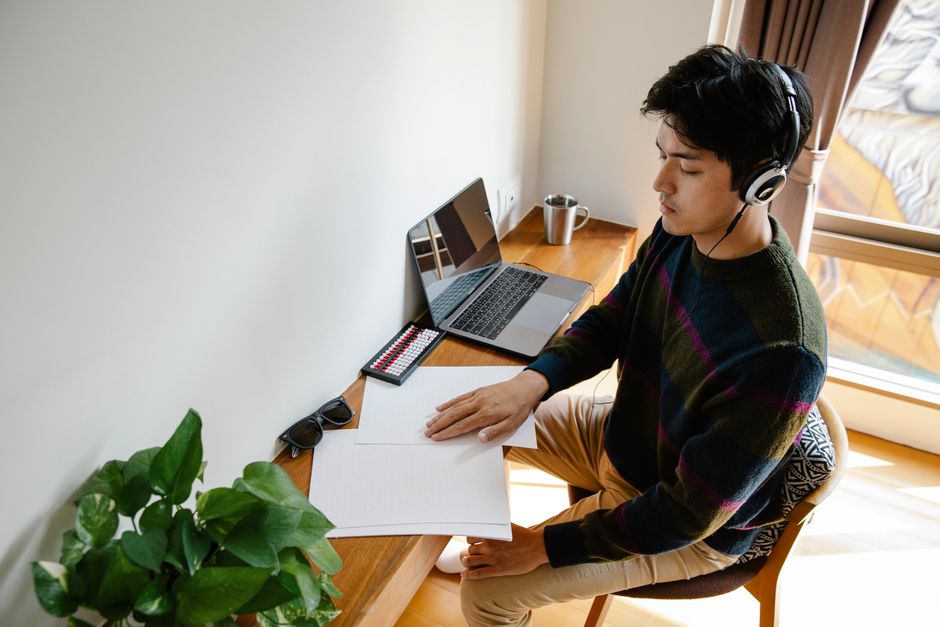
A dedicated study setup changes the math. When you can upload a PDF, listen to it narrated at your pace, and ask questions about the passage you just heard without leaving the playback, you've turned a passive listen into an active one. That's the difference between the children who stared at the marshmallow and the ones who turned their chair around.
The children who waited weren't stronger. They were better equipped for the situation. The same goes for you. Learning by listening isn't about raw willpower or a better memory. It's about having the right tools to ask questions while the audio is still playing, and the discipline to actually use them.
Comments
No comments yet.